

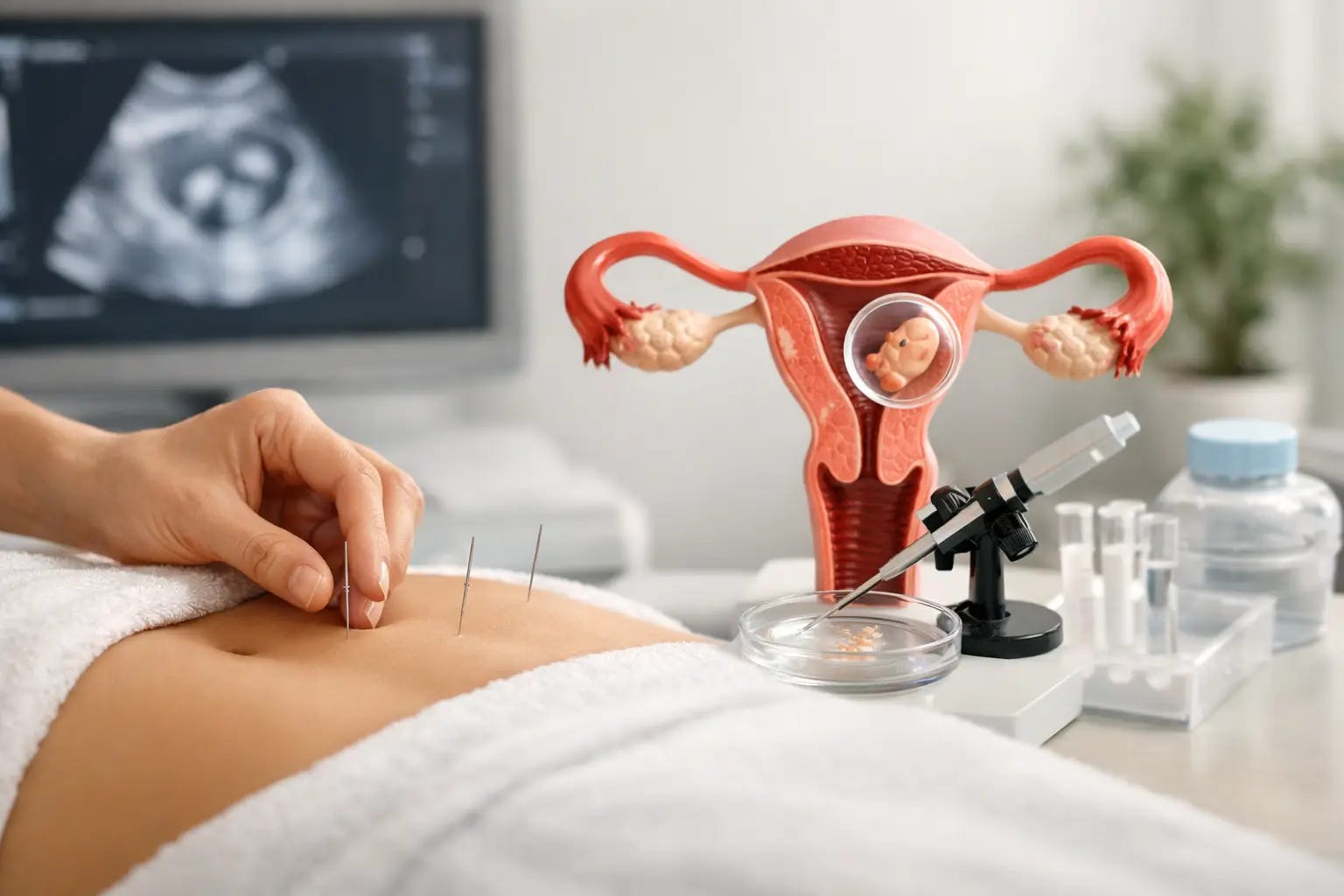
We had another successful IVF transfer with announcement of conception occured this week! Now it is about helping this mother get through the first trimester. I recommend once a week - but ideally twice a week through first trimester, especially if have had previous miscarriages.
The days around an embryo transfer can feel exquisitely tender. You may be carrying hope, caution, grief from previous cycles, and a deep wish to do everything possible for the life you are welcoming. This embryo transfer acupuncture guide is meant to bring you back to what you can gently influence: circulation, nourishment, nervous-system steadiness, and compassionate support for your whole body.
After more than 30 years of caring for fertility patients, and after walking through my own infertility journey, I know this moment is about far more than a calendar date or a treatment protocol. Acupuncture can be a meaningful part of IVF support, but it works best within a thoughtful, coordinated plan that honors your reproductive endocrinologist’s guidance and your unique health history.
What acupuncture can and cannot do around embryo transfer
Acupuncture is commonly used before and after embryo transfer to support relaxation and pelvic blood flow. In Traditional Chinese Medicine, we also consider the quality of blood, the smooth movement of qi, digestive strength, sleep, stress patterns, and the body’s capacity to receive and nourish.
Feeling calmer, sleeping more deeply, eating regularly, and having a trusted clinician beside you can be valuable in their own right during a demanding process.
Acupuncture down regulates the nervous system, assisting in better blood and hormonal flow and, as my patients have attested to, better fertility outcomes.
Embryo transfer acupuncture guide: timing with care
There is no single schedule that fits every IVF cycle. Some people receive acupuncture regularly for several weeks or months before transfer, especially when working on sleep, digestion, stress, painful periods, inflammation, or cycle regulation. Others begin closer to transfer because of time, distance, budget, or an unexpected change in their treatment plan.
I recommend twice a week for up to 8 to 12 weeks prior to a transfer and recommend the before and after treatment (24 hours before and 24 hours after) the day of the transfer itself.
A common approach includes a treatment in the days leading up to transfer and, when practical, a gentle session on the day of transfer before or after the procedure. Some clinics have specific policies about on-site acupuncture or timing, so ask your IVF team what is possible. If same-day treatment creates rushing, traffic stress, or pressure to follow a rigid schedule, a calm appointment the day before may be more supportive for you.
After transfer, treatment plans should remain gentle and individualized. The goal is not to “make” implantation happen. It is to support a settled nervous system, circulation, rest, and overall well-being while avoiding overly aggressive treatment. Your practitioner should know whether you are using a medicated, modified natural, or natural cycle, as well as your medication list, transfer date, medical history, and any symptoms that need physician attention.
If you have a history of recurrent miscarriage, endometriosis, adenomyosis, autoimmune concerns, thin lining, PCOS, or repeated implantation failure, your plan may need more preparation and deeper functional medicine investigation before another transfer. This is where personalized care matters. Two people can have the same transfer date and need entirely different support.
The week before transfer: nourish, do not perfect
The transfer week is not the time for a punishing cleanse, a new restrictive diet, intense exercise challenge, or a cabinet full of supplements chosen from social media. Your body benefits more from consistency than perfection.
Aim for regular meals (preferably warm and cooked) built around protein, colorful plants, satisfying fats, and fiber-rich carbohydrates that your digestion tolerates well. Warm, easy-to-digest meals are often especially comforting when anxiety tightens the stomach: soups, stews, roasted vegetables, eggs, fish, beans, lentils, whole grains, and cooked fruit can be wonderful choices. Hydrate steadily, but do not force excessive water.
From both a fertility nutrition and TCM perspective, blood sugar steadiness matters. Skipping meals can amplify shakiness, insomnia, irritability, and the stress response. Keep simple foods available for appointment days so nourishment does not become another task on an already full emotional plate.
Review every herb, supplement, tea, and over-the-counter product with your IVF physician and qualified fertility practitioner before transfer. Some formulas and supplements may be appropriate earlier in a fertility plan but paused or adjusted around transfer and early pregnancy. Natural does not automatically mean suitable for every stage.
Create safety in the nervous system
You do not need to be perfectly calm to become pregnant. Please release that burden. Fertility struggles are not caused by a single anxious thought, a difficult workday, or a moment of tears. Yet chronic stress can affect sleep, digestion, inflammation, and how supported you feel in your own body.
Choose a few practices that genuinely soothe you rather than adding another checklist. A ten-minute walk outside, restorative yoga, a warm bath if permitted by your care team, breathwork, prayer, journaling, or placing a hand over your heart and lower abdomen can become small rituals of return. Try a simple breathing pattern: inhale comfortably for four counts and exhale for six, repeating for two or three minutes.
This is compassionate care, not a performance. There may be days when all you can do is take your medication, eat something nourishing, and rest. That is enough. Your body is not failing you because the path has been hard.
I recommend YouTube relaxation guided meditations such as Michael Sealy and others, along with turning off upsetting news and watching and listening to things that make you feel happy and hopeful.
Getting outside in the sun and sitting by the water is known to reset the bio electrical frequencies in our body to be more relaxed, and more in the parasympathetic - fertile friendly state.
Questions to ask before booking acupuncture
A fertility-focused acupuncturist should welcome collaboration and clear questions. Ask how they coordinate with IVF protocols, what their approach is on transfer day, and how they decide whether to use herbs or supplements. You may also ask about their experience with your particular concerns, such as low ovarian reserve, endometriosis, PCOS, sperm health, recurrent loss, or unexplained infertility.
Pay attention to how you feel in the conversation. You deserve care that is informed, unhurried, and free of unrealistic promises. A practitioner can offer hope without claiming certainty. The best plan is one that fits your medical needs, values, schedule, finances, and capacity.
At Fertility Whisperer™, I view acupuncture as one thread in a larger tapestry of healing. We may also look at fertility nutrition, functional medicine patterns, inflammation, sleep, movement, acupressure, yoga, emotional support, and the practical realities of your IVF journey. For local patients, this can happen through in-clinic care in San Jose. For many others, personalized education and guidance can begin from wherever they are.
After transfer: protect your peace, not your every move
Follow your clinic’s instructions about activity, medications, and testing. In most cases, gentle everyday movement is acceptable, but your own medical team should guide you if there are specific restrictions. Avoid obsessively searching for symptoms. Progesterone and early pregnancy can create sensations that overlap, and the waiting period rarely offers clear answers.
Instead, make a small plan for the two-week wait. Decide who knows about the transfer, what work obligations can be softened, and who you can call when worry rises. Prepare comforting meals, choose a few low-stakes distractions, and let your partner or a trusted friend carry practical tasks when they can.
There is also room for mystery here. The body is beautifully complex, and embryo transfer is influenced by factors we can see and factors we are still learning to understand. What might change if your next step were not another attempt to control every variable, but a more complete understanding of what your body has been asking for all along?
Ready for personalized guidance?
You do not have to navigate fertility alone. If you would like caring, evidence-informed support for IVF, egg quality, sperm health, recurrent miscarriage, PCOS, endometriosis, or unexplained infertility, begin with the Free Fertility Handbook. You can also explore a free 15-minute Q&A or receive encouragement through Free Fertility Tips Walk & Talks. Your next step may be simpler, gentler, and more hopeful than you think.
I help women get pregnant, stay pregnant and have healthy babies. If I can be of assistance to you or anyone you know, please share this Substack.
Fertility is Natural, Trust Nature
Dr. Shasta Ericson DAOM
Holistic Fertility Specialist
That's the only place he turns up in the plan, and in most of the houses I've sat in he's already running one of his own. He stops drinking, skips the heat, goes to bed at ten, and tells nobody, because saying it out loud would make transfer week about him. Nothing ever acknowledges it, so by the second week it's quietly gone. One line addressed to him inside that two-week plan would hold it in place